

This Startup Accelerator Helps Social Entrepreneurs Increase Their Impact

ewalsh • November 17, 2015

For full Forbes.com article details and related content, please click here.

Interest in social entrepreneurship may be increasing, but most of the startup ecosystem remains focused on traditional companies. In Hartford, Connecticut, a group called reSET, the Social Enterprise Trust, is working to fill that gap.

ReSET has built an innovative mix of resources, funding and programs–including an accelerator–designed to help socially responsible businesses reach the next level. Its Impact Accelerator, now in its third year, is accepting applications until December 10th for its next session, which begins in January 2016 and runs until June. The accelerator was a winner of the U.S Small Business Administration Growth Accelerator Competition in 2015.

Unlike most programs, the accelerator has a flexible, weekend program as well as a pay-what-you-can model. Founders attend five weekend summits, and have access to mentors and an Entrepreneur-in-Residence. A $25,000 accelerator funding pool will be available to the cohort at the end of the program, and teams will also have priority access to reSET’s investment fund.

ReSET’s roots go back to 2007, when entrepreneur Katherine Emery, inspired in part by the Enron debacle, decided to turn The Walker Group, her technology consulting company, into a socially responsible enterprise. “What I kept hearing was what an ugly world business was,” she says. “It started to feel like a club I didn’t belong to.” She thought about selling her company, but then decided not to abandon what she’d spent 20 years building. Instead, she would “use it as a sandbox,” and explore ideas about what a business should be and do.

Though the term social enterprise wasn’t yet on most people’s radars, Emery started developing her company to be sure it was fiscally transparent and socially responsible. When it came to profits, she believed they should be shared among employees, the community and shareholders. As she was the only shareholder of her 30-employee company at the time, she created a non-profit called reSET, which had preferred shares and a board of directors with a socially responsible mandate. If she sold her company, that structure would ensure it would remain a social enterprise.

In 2010, with interest in the sector picking up, reSET hosted its first conference. A group of volunteers continued to develop reSET with the goals of educating entrepreneurs about benefit corporations, helping them access funding and creating community. ReSET now has a small staff, and offers a co-working space and mentor network as well as its many events. Emery also advocated for Connecticut’s benefit corporation legislation, which became law last year and is the only such law in the country that includes a preservation clause. Her goal, she says, is to turn Connecticut into the “social enterprise state.”

While more people are interested in the social enterprise model, there are still hurdles for founders to overcome when setting up and running such companies. Social enterprises can be harder to lead, says Emery. “Traditional business is not easy but it is simple, as anything that drives up revenue or drives down costs is good,” she says. “But decision making when you have double or triple bottom lines requires a lot more balancing.” Measuring results can also be a challenge. And when starting out, it can be hard for founders to get the guidance they need. “If you are starting out as a benefit corporation, I think there is a lot of advice that isn’t right for you,” says Emery. “You may not do well with a traditional lawyer or accountant.”

When she started reSET, Emery says she through that legislation and funding were “everything.” Now, she’s seem the power of like-minded people being able to share experiences, advice and support. Says Emery: “Building a community of people who get it is crucial.”
By awalsh • September 29, 2026
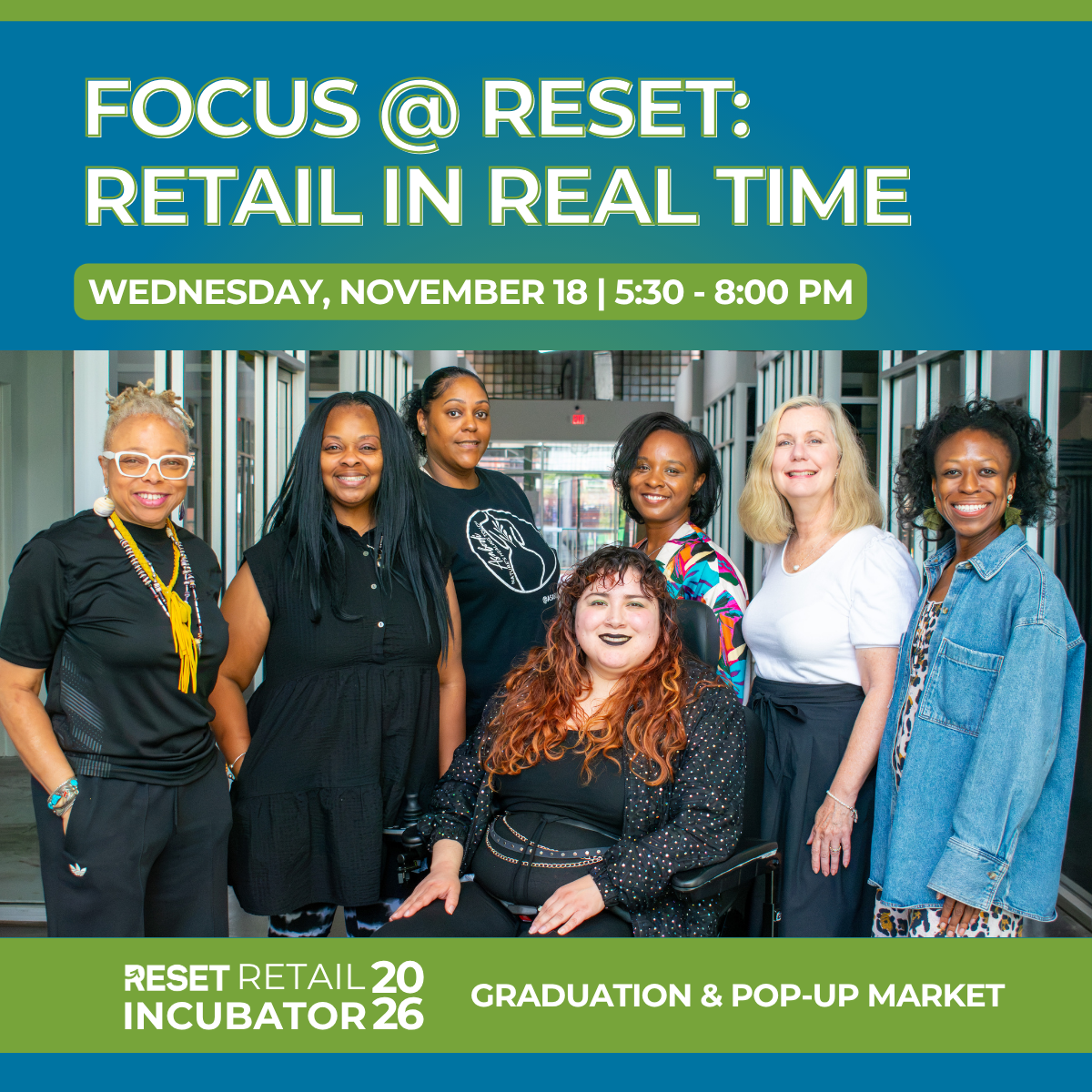
Program Supports Early-Stage Retail Businesses with $7,000 in Grants Hartford, CT – Tuesday, September 29, 2026 – Reset, the Connecticut-based entrepreneurial support organization committed to advancing impact-driven businesses, is proud to introduce the ten businesses participating in the sixth cohort of the Floor–Plan Retail Incubator this fall. The program equips local founders with the tools to launch, grow, and thrive in today's retail landscape. Thanks to support from the Connecticut Department of Economic and Community Development, each business completing the program will receive a $700 grant to support their business. Save the date: Focus @ Reset: Retail in Real Time The Incubator will culminate in the Focus @ Reset: Retail in Real Time graduation and pop-up market event on Wednesday, November 18 from 5:30-8:00pm at Southern Connecticut State University in New Haven, where the community can meet these entrepreneurs and experience their products firsthand. Get tickets at https://bit.ly/retail26 with the early bird discount of $5 off tickets purchased before November 1. "This cohort is building businesses that infuse care, heritage, and artistry into every product they make, and we’re excited to develop strong local businesses that invest right back into our communities," said Sarah Blecher, Executive Director of Reset. "This group brings the total number of retail businesses supported through the Retail Incubator to 73 since its launch in 2021." "From Puerto Rican pastries to block prints about collective liberation, this cohort shows how many different paths lead to a meaningful retail business," said Ndubisi Okeke, Reset Program Manager. "Our Retail Incubator gets them ready for holiday sales and sustainable operations well beyond this season, building businesses with impact." Comprehensive Support for Connecticut Entrepreneurs The Retail Incubator reflects Reset's commitment to supporting entrepreneurs who are building businesses that create positive community impact. During the 12-week program, participants access experienced mentors, legal and financial support, peer networks, and real-world opportunities to test and refine their business models. The $700 small business grant at the conclusion of the incubator provides additional support to grow their businesses. The Ten Businesses in This Year's Floor–Plan Retail Incubator: Assiah Tea & Wellness , founded by Margo Jones, offers premium loose-leaf teas, handcrafted herbal blends, and curated tea services, combining hospitality, education, and wellness to encourage connection and intentional self-care. Asabodi, created by Melissa Carrasco, is a growing small business offering vegan and plant based skincare products like turmeric sugar scrub, body butters, lotions, African black liquid soap, and scalp stimulator. Dream Fleurs , founded by accessory and web designer Maureen Connelly, is a lifestyle accessory brand inspired by flowers, travel, and historic gardens around the world. Granny's Doggie Treats , is a growing small business created by Claudia Cupe, specializing in quality, homemade dog and cat treats crafted to provide pet parents with wholesome, flavorful options while promoting responsible pet care and supporting the special bond between pets and their families. L&M Desserts , led by owner and head baker Anaïs Esther Nuñez, is a family-operated business bringing authentic Puerto Rican desserts to families, events, and catering clients across Connecticut. NUR the Label , founded by Yasmin Laila, is a contemporary fashion brand reimagining the kaftan through a modern lens, honoring African and Middle Eastern dress traditions with pieces designed for celebrations and everyday expression. Pajareando Press , created by artist, educator, and community organizer Elida Paiz Pineda, creates one-of-a-kind block prints, illustrations, and craft works exploring social justice, collective liberation, and radical joy. Ruby Sampson , founded by Ashley Powdar in 2016 in honor of her grandmother, is an artisan-powered brand based in the U.S. and Guyana that creates silk-lined hair accessories, head wraps, and apparel on a mission to close the grooming gap for natural hair textures. Trinkky Trinkks , founded by performer and choreographer Cristal Coleman, is a specialty gift boutique offering handcrafted jewelry alongside curated handbags, accessories, and unexpected finds, built as a pathway toward generational wealth. Wábi Arts , founded by photographer and arts advocate Kim Weston, is a developing gallery and teaching space in downtown New Haven featuring Connecticut-based and emerging artists and home to the FOCUS Fellowship, a teen photography mentorship program. About the Floor–Plan Retail Incubator Now in its sixth year, it is part of a suite of retail opportunities from Reset and Hartford-based Breakfast Lunch & Dinner, a community activation studio. Reset’s three-month incubator provides entrepreneurial technical support to early-stage retail businesses, helping participants understand customer needs, define pricing strategies, address key legal and financial topics, and prepare for new market opportunities. Entrepreneurs gain insights from industry experts, access a supportive community, and receive practical tools to enhance their business acumen. Through the Floor–Plan partnership, entrepreneurs can access additional market outlets and retail opportunities through Breakfast, Lunch & Dinner. About Reset Founded in 2007, Reset is a nonprofit organization headquartered in Hartford, CT, whose mission is advancing the social enterprise sector and providing inclusive entrepreneurial support across Connecticut. In February 2025, Reset acquired New Haven-based Collab, combining complementary strengths to create a more robust ecosystem for impact-driven entrepreneurs throughout the region. Reset specializes in social enterprise, meaning impact-driven businesses with double or triple bottom lines, and provides coworking space, accelerator programs, and mentoring services that inspire innovation and community collaboration. To date, Reset and Collab have assisted over 700 small businesses to start and grow with impact, and reached thousands more through low-touch supports. Visit resetco.org to learn more. # # #
By awalsh • July 9, 2026
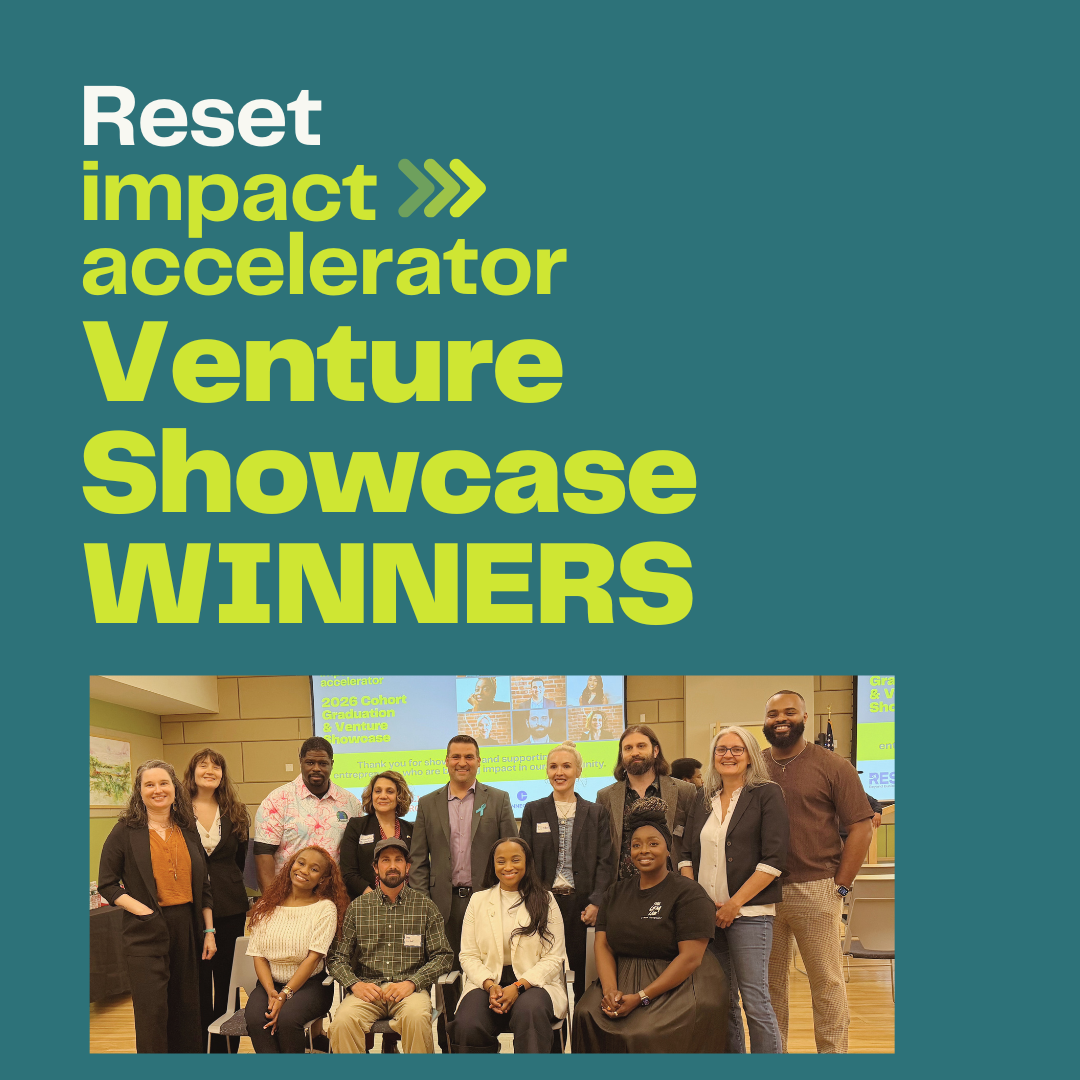
Showcase Awards Over $18,000 in Grants and Prizes
By awalsh • June 26, 2026
Nine Entrepreneurs Celebrate Graduation from Spring Cohort and Share Over $15,000 in Prizes and Grant Support
June 25, 2026
Launching a New Statewide Partnership to Connect Aspiring and Growing Food Businesses with Structured Programming, Education & Resources
Sarahblecher
June 23, 2026
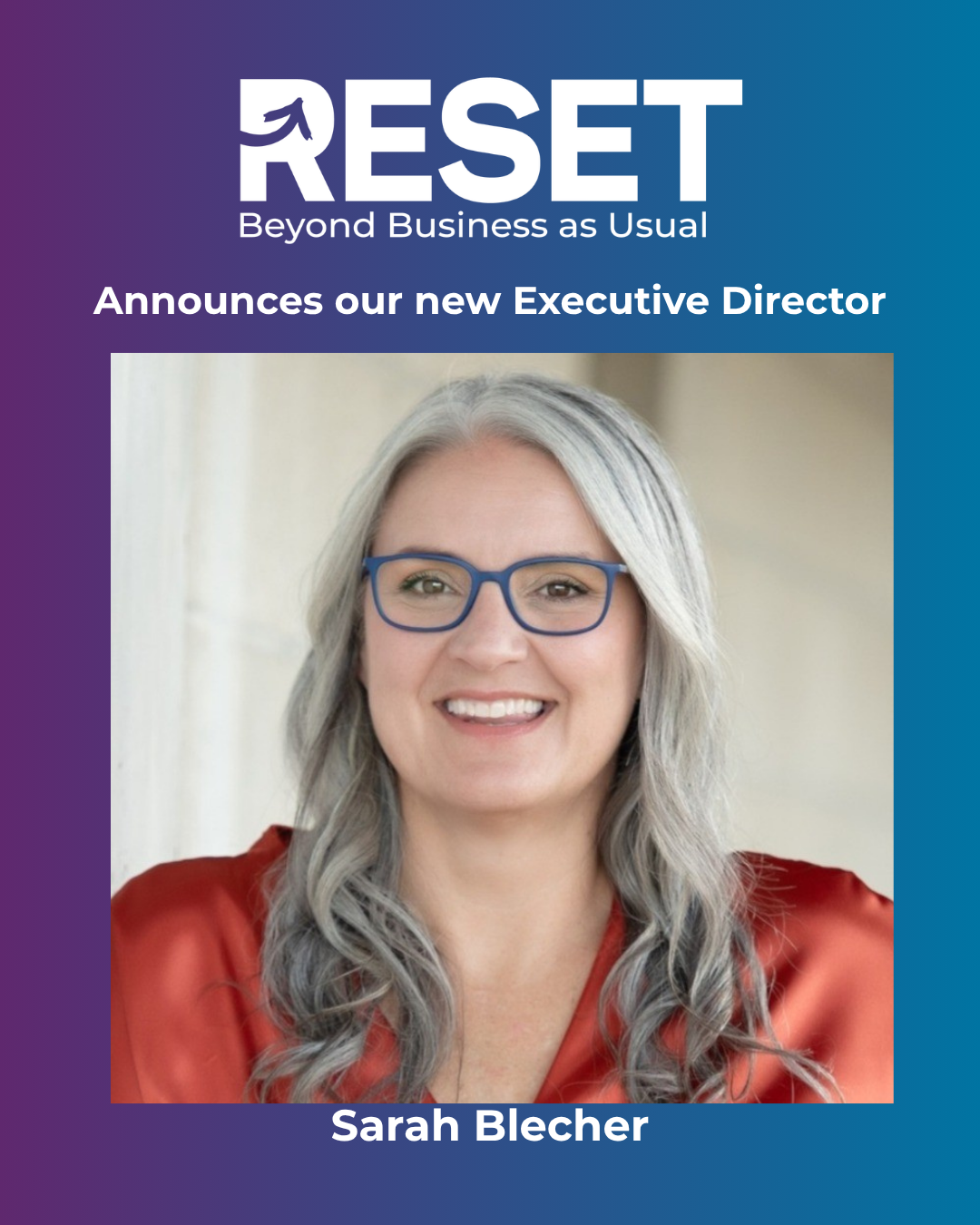
Marketing Strategist and Connecticut Small Business Mentor Succeeds Sarah Bodley
By awalsh • June 4, 2026
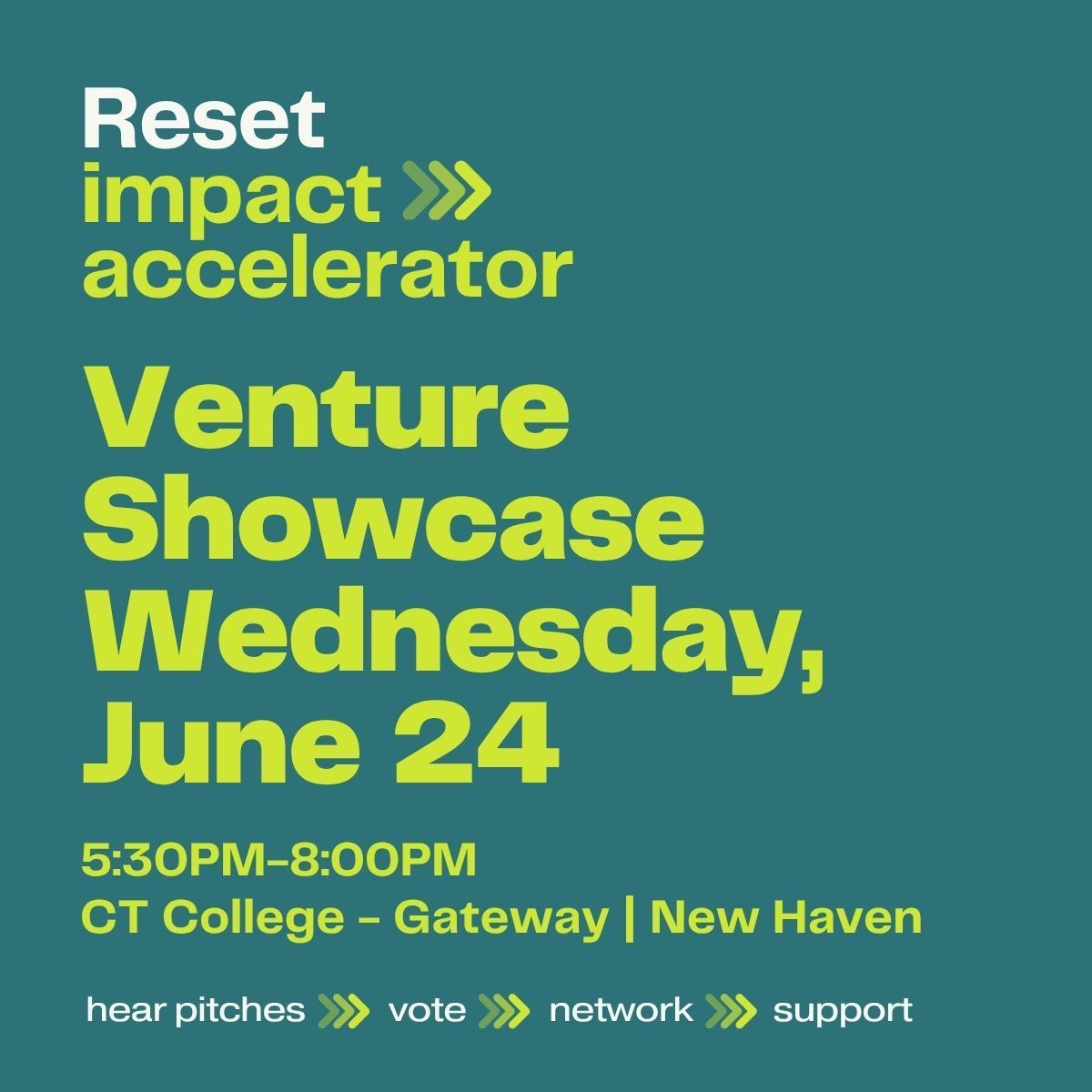
Eight Businesses Will Compete for Over $15,000 in Prizes and Grant Support at CT State Community College–Gateway
May 14, 2026
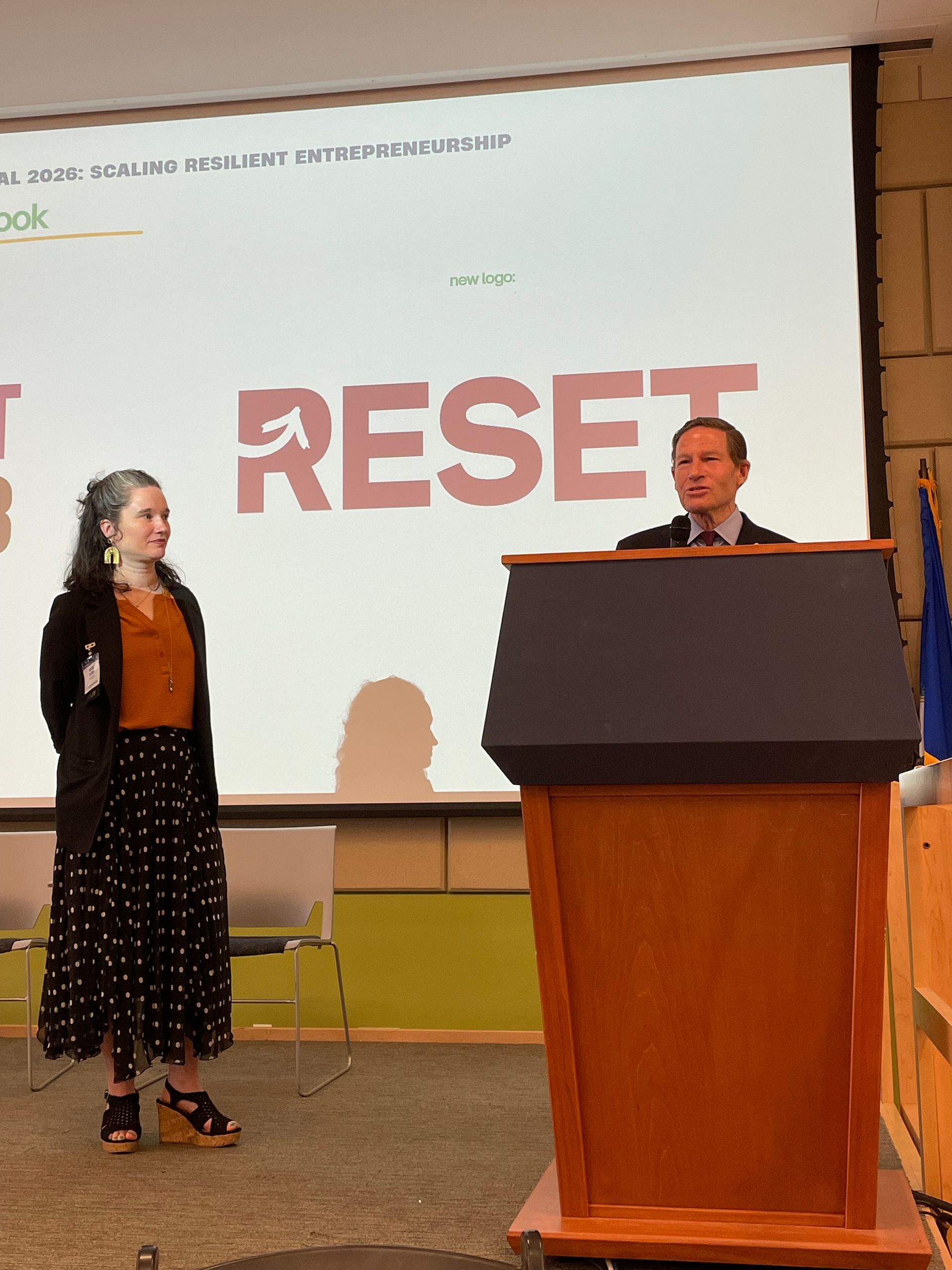
Reset announces its new logo
May 14, 2026
A Day Full of Honest Connection for Entrepreneurs
By SBodley • May 7, 2026
This Spring we asked our community to weigh in on their biggest challenges, interests, and opportunities related to impact-driven and sustainable business. We were proud to partner with CT Sustainable Business Council on this effort. Select findings were shared at Beyond Business As Usual 2026: Scaling Resilient Entrepreneurship, and we aim to continue taking action on the things that rose to the top. Click through the arrows to see the key findings.
By awalsh • April 23, 2026
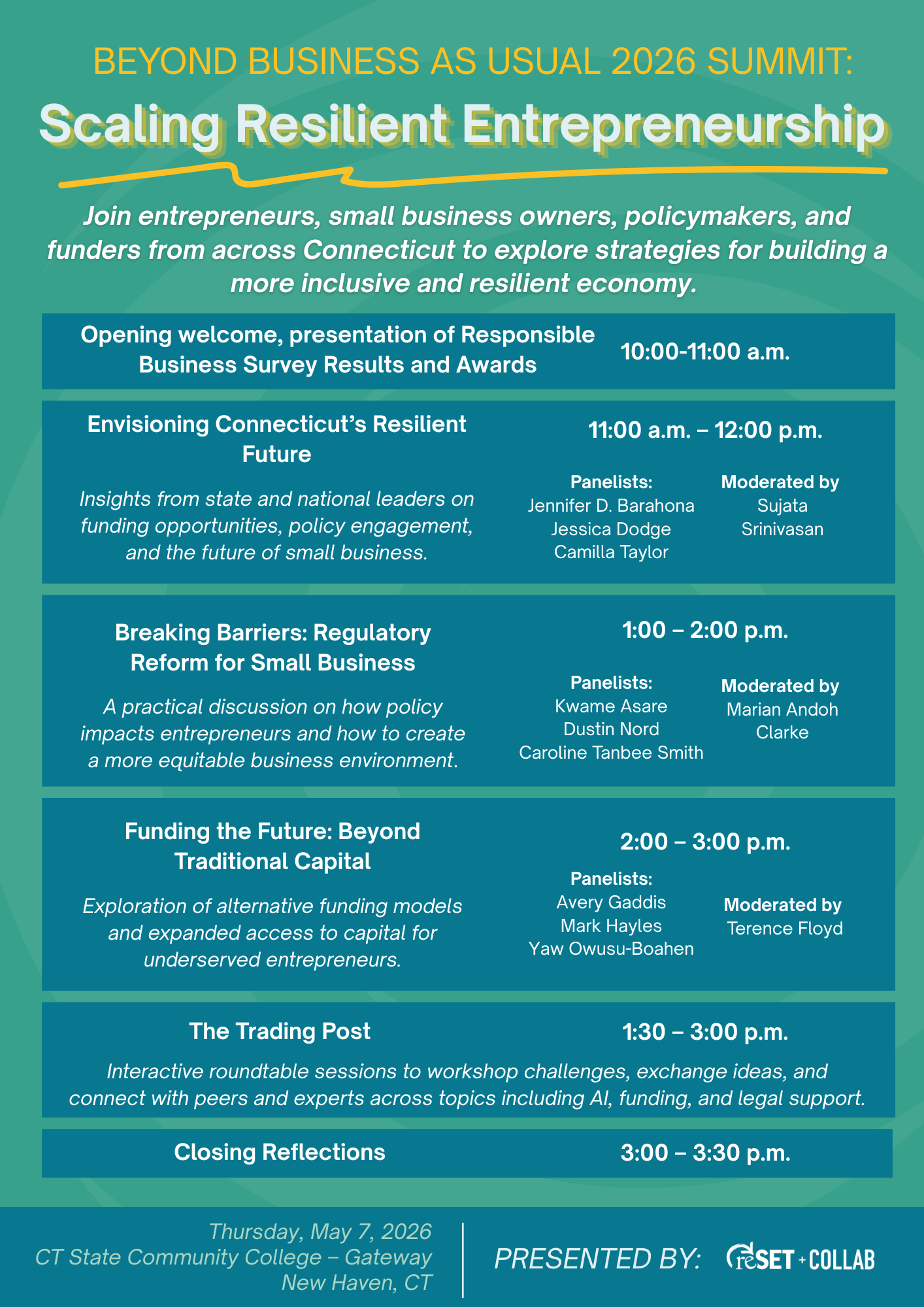
 Summit Brings Together State Leaders, Policymakers, and Entrepreneurs During National Small Business Week